Trailer-V and YuE2 Studio
An electron based video editor, a wrapper around YuE2 music model, and an MCP with exposed micro-ui for consistent UX interoperability.
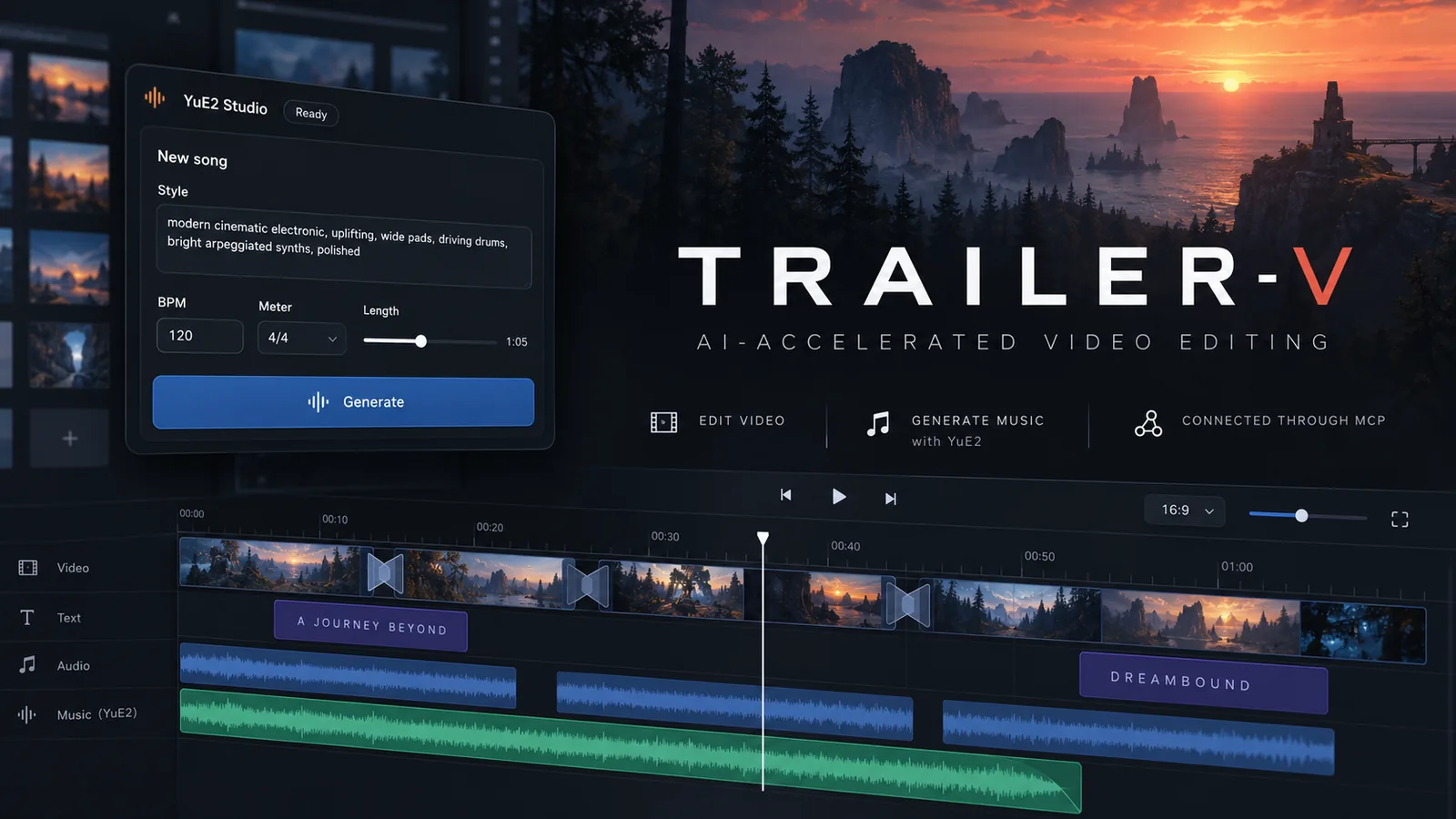
Software is dead. “Askware” is alive.
I just finished Dreambound, a project that I’m very excited about. It dawned on me that even though most people won’t play it, I still wanted to share a glimpse of it with others. I needed a trailer for the game.
Learning another video editor wasn’t something I was passionate about, but designing and working with Opus to create one certainly was. It worked really well! It solved my video need, but I still needed a way to generate audio tracks for the video. My friend tipped me off to YuE2-3B which is a very capable audio generation model that I can run locally. I had Opus write a wrapper program for that, which worked great.
Can Claude or Codex use these programs on my behalf?
Building collaboration into your tools makes them more powerful. Including an MCP within said tools immediately allows for a human / AI cooperation within an application.
What if the MCP server could expose a pre-packaged micro-ui for consistent UX?
We build custom UI’s around our REST endpoints all the time, is it possible to do the same for an MCP method in a way that lets the MCP server define the UI/UX? It mostly depends on the invoking client, but in this case, Yes!
The Micro UI is a small React app bundled into a standalone html file and exposed as an MCP resource. The tool names the UI by its URI, and the host (Trailer-V) fetches the page separately and displays it in a sandboxed iframe. The result is a UI defined by YuE2 Studio can be displayed directly inside of Trailer-V, and neither application needs to re-define the other’s interface.
Let’s see this is action! With YuE2 running, I can right click in Trailer-V and select “Generate Audio”.
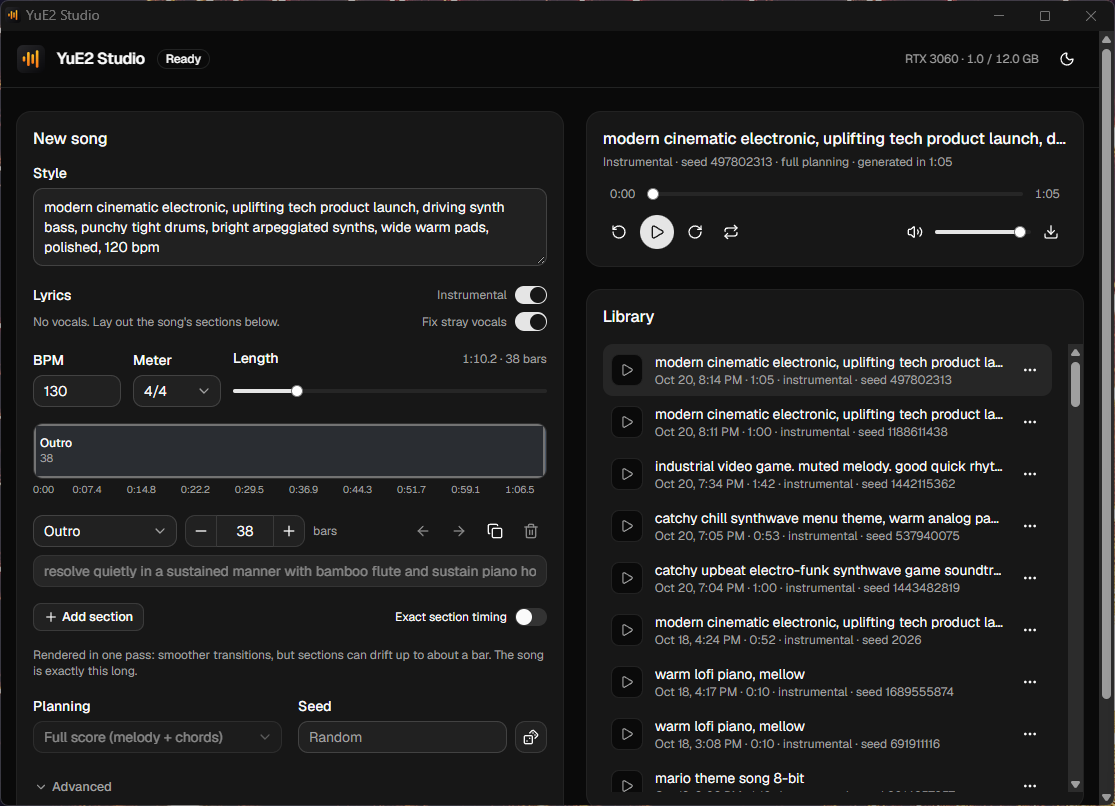
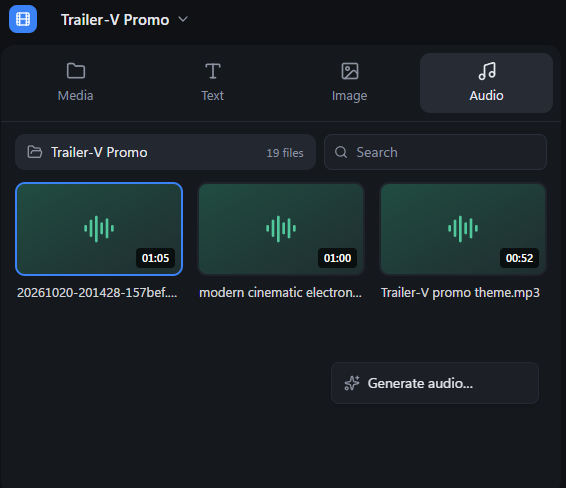
This invokes the MCP, which returns an optional micro-ui for the invoking program to show. This allows for a unified UI experience to be defined by the source program, thus the invoker doesn’t have to redefine the UI.
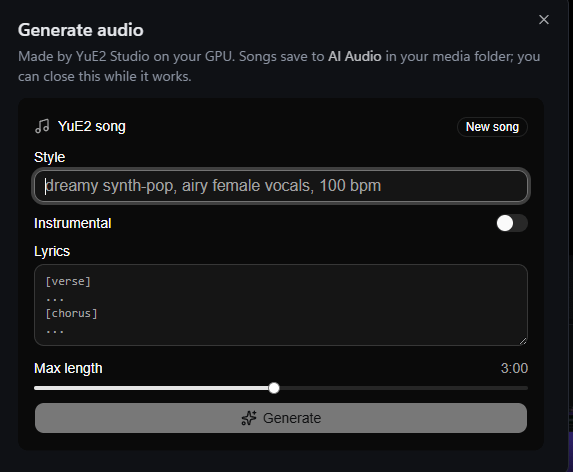
After generation is complete, the audio is imported directly into a new audio track if I approve it.
I now have a custom video editor, a lightweight music generation studio. What excites me the most is that I can build exactly what I need, when I need it, and have it tailored to my local system. If I need changes, I only need to ask!